
 Image 1 of 5
 Image 2 of 5
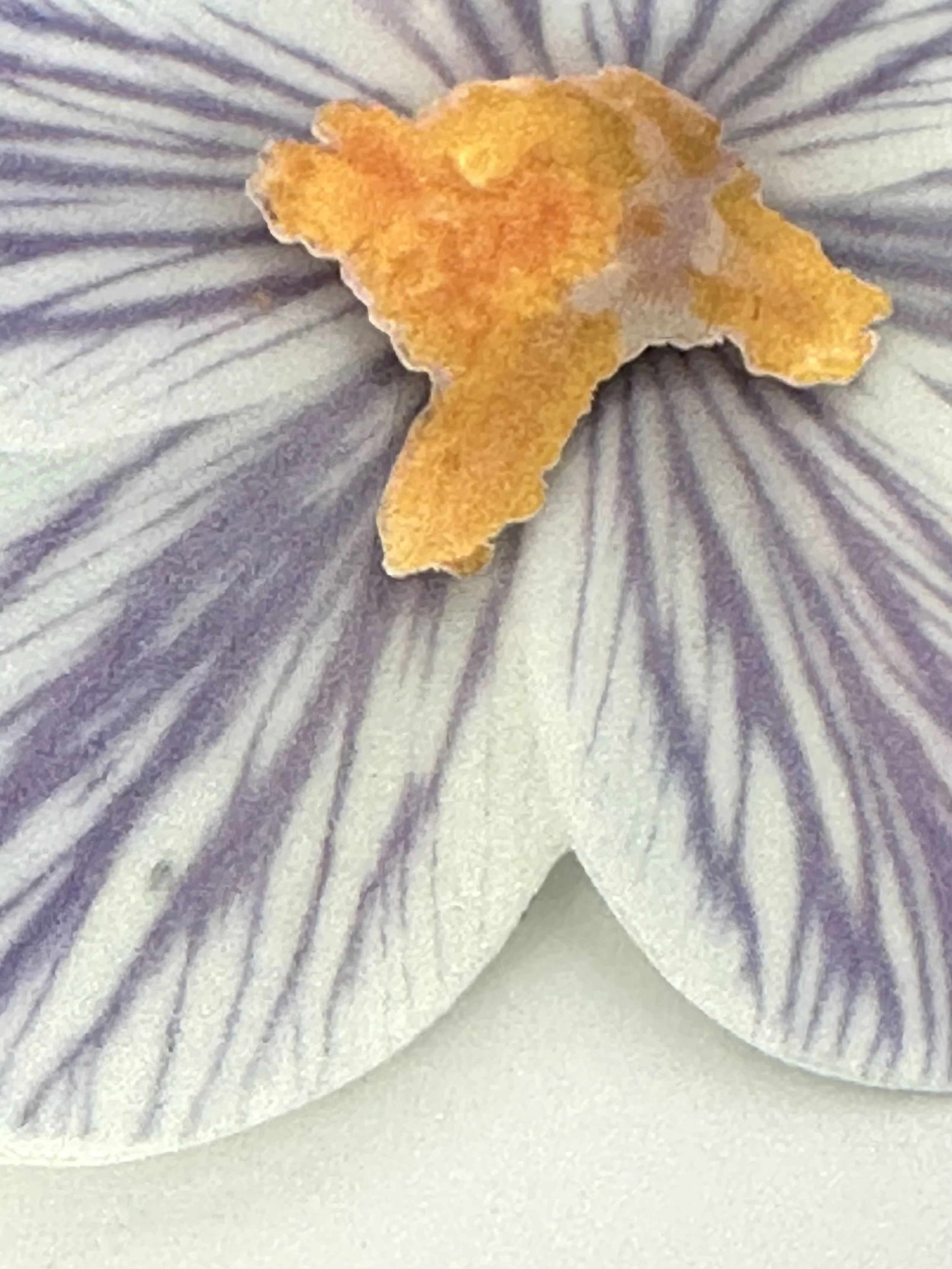 Image 3 of 5
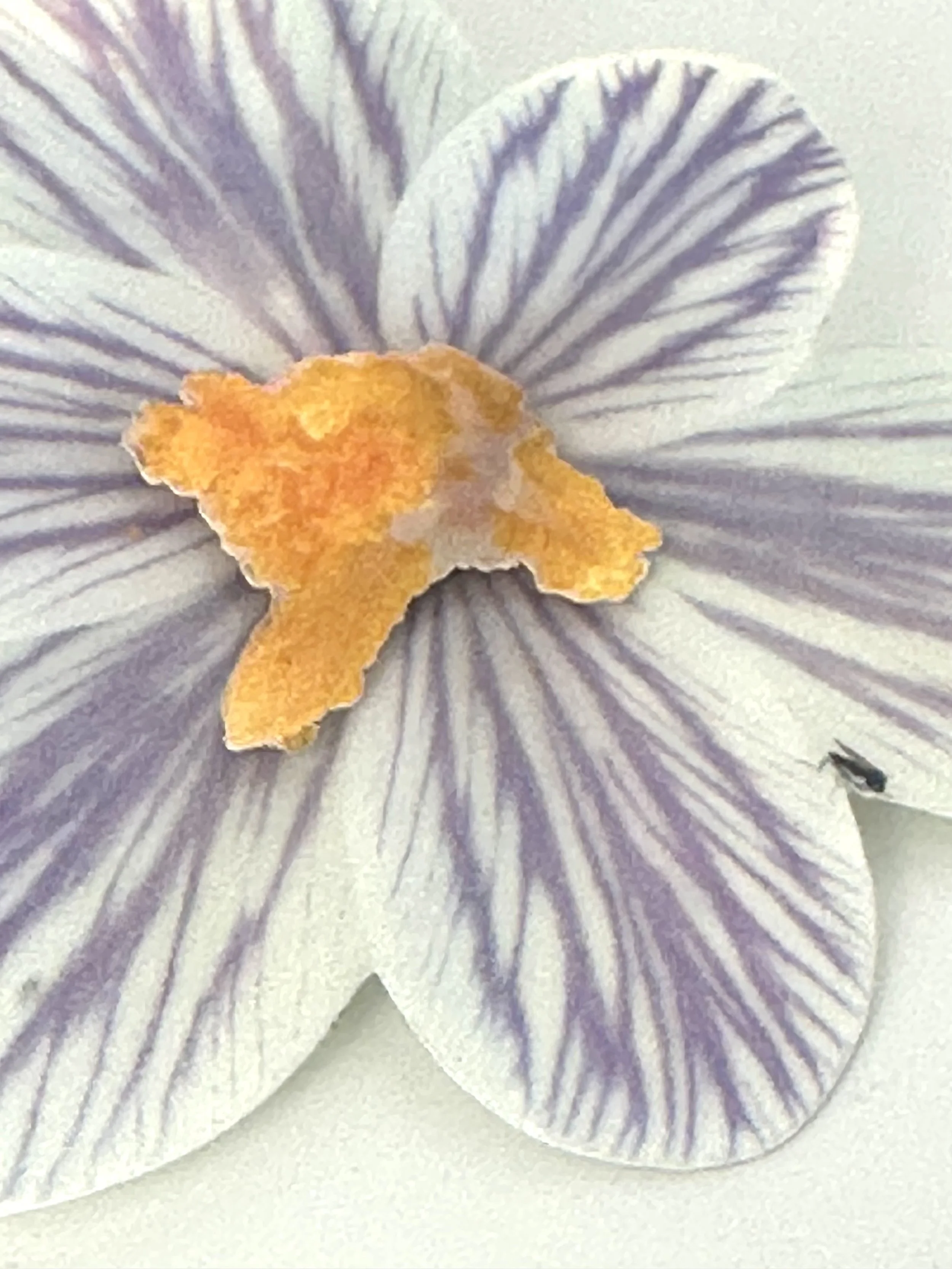 Image 4 of 5
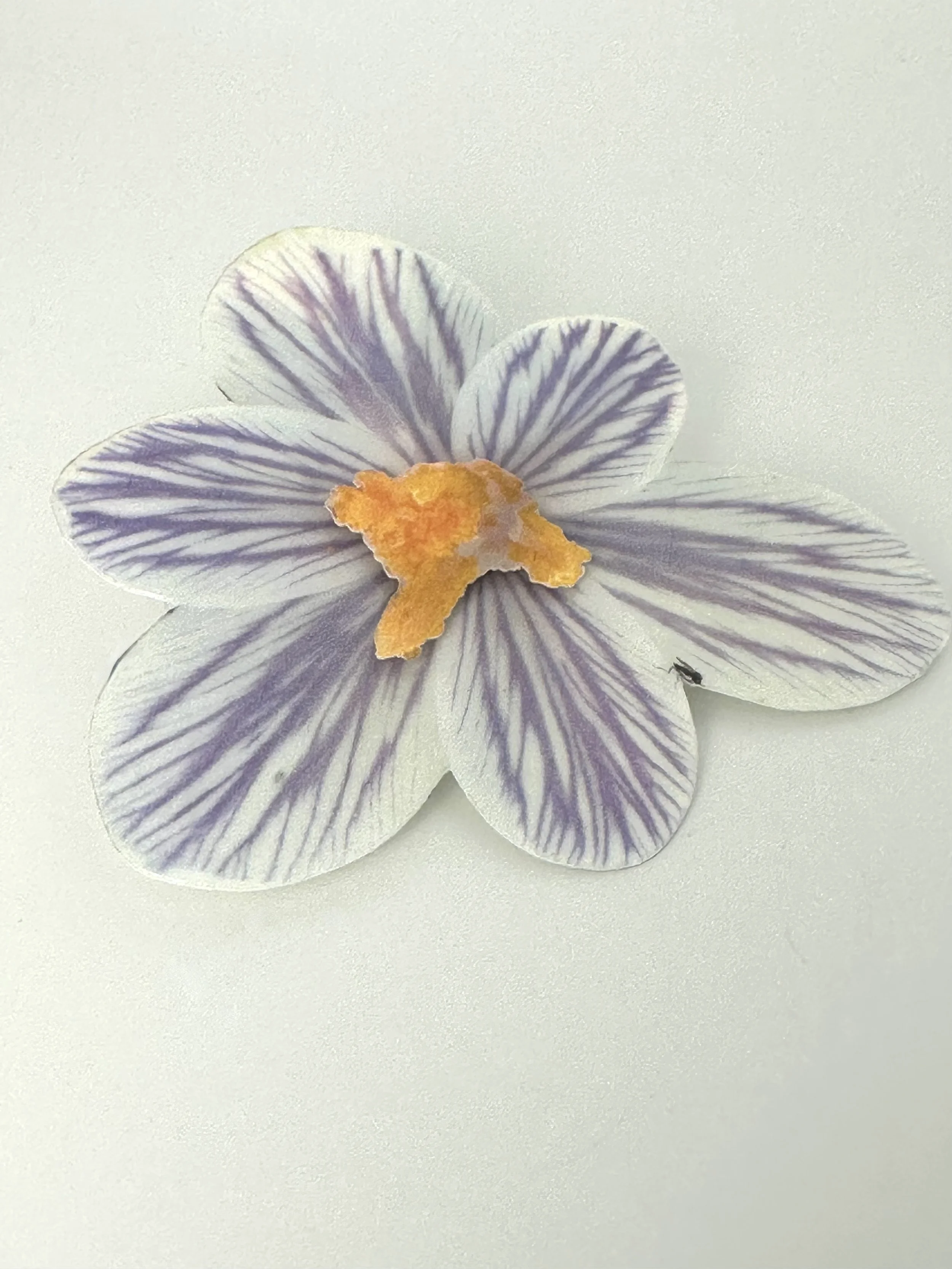 Image 5 of 5
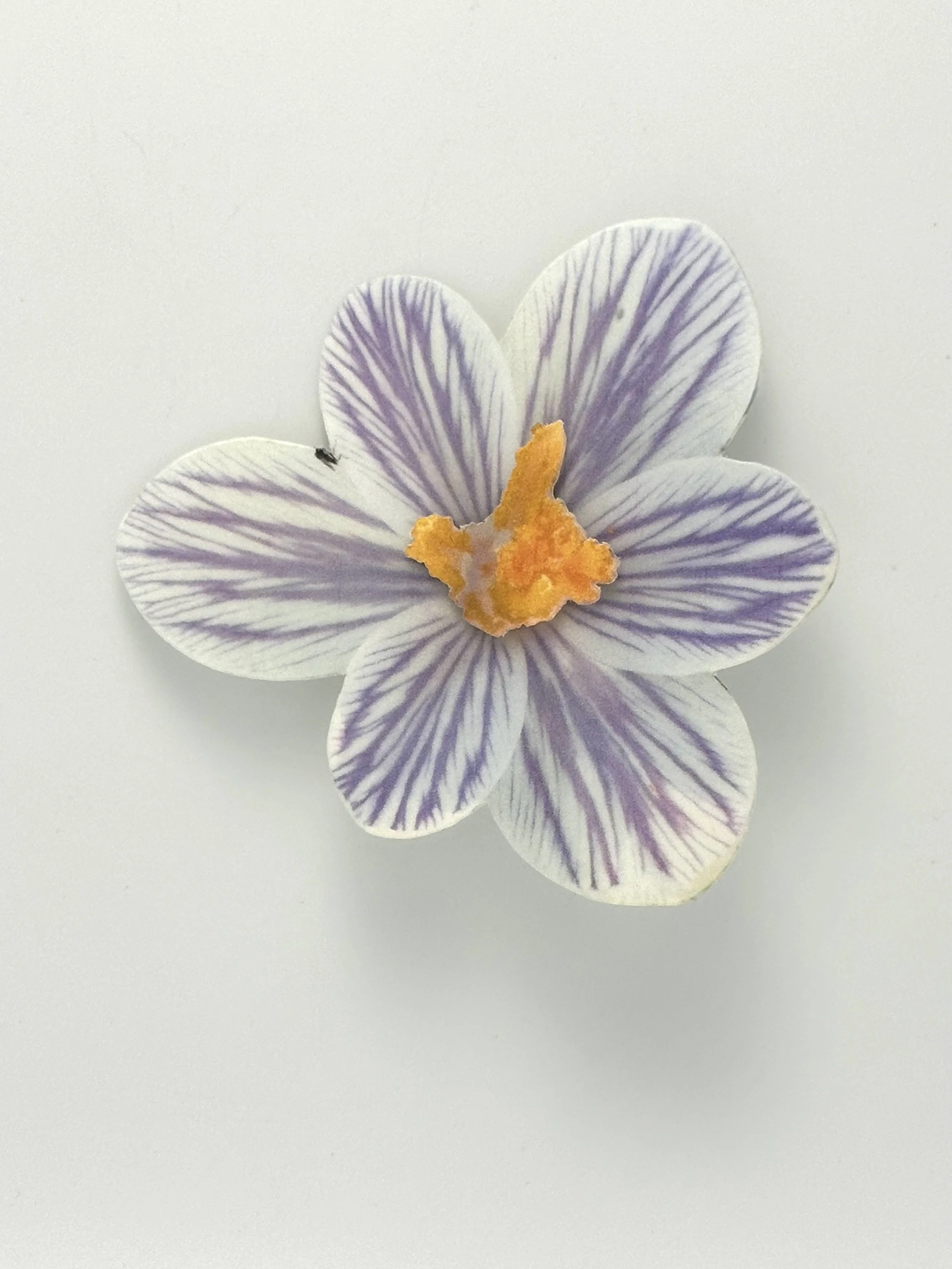
This is the first in a series of corsages/boutonnieres I am making of this year’s flowers, grown here at our Victorian Gothic black dirt farmhouse, The Blawnut House, in the Hudson Valley in New York. I grow the flowers, photograph them, laminate them, and turn them into pins!
This baby came up in March and I managed to photograph it before it was stomped on by our chickens. The pin is larger than life, measuring 3 inches at its widest diameter. There is a double center that makes it slightly three-dimensional with a stainless steel lapel pin fastener. Each pin is signed, numbered, and dated. Collect them all.
Crocuses (the standard plural, as the word originally comes from the Greek) are native to the Mediterranean, Southern Europe, North Africa, and Central Asia. The highest concentration of species are found in the Balkans and Turkey. This variety is called a Dutch crocus and is native to the Alps, Pyrenees, and the Balkans. They thrive in areas with cold winters and hot, dry summers like alpine meadows, woodlands, and scrublands.
This is the first in a series of corsages/boutonnieres I am making of this year’s flowers, grown here at our Victorian Gothic black dirt farmhouse, The Blawnut House, in the Hudson Valley in New York. I grow the flowers, photograph them, laminate them, and turn them into pins!
This baby came up in March and I managed to photograph it before it was stomped on by our chickens. The pin is larger than life, measuring 3 inches at its widest diameter. There is a double center that makes it slightly three-dimensional with a stainless steel lapel pin fastener. Each pin is signed, numbered, and dated. Collect them all.
Crocuses (the standard plural, as the word originally comes from the Greek) are native to the Mediterranean, Southern Europe, North Africa, and Central Asia. The highest concentration of species are found in the Balkans and Turkey. This variety is called a Dutch crocus and is native to the Alps, Pyrenees, and the Balkans. They thrive in areas with cold winters and hot, dry summers like alpine meadows, woodlands, and scrublands.